
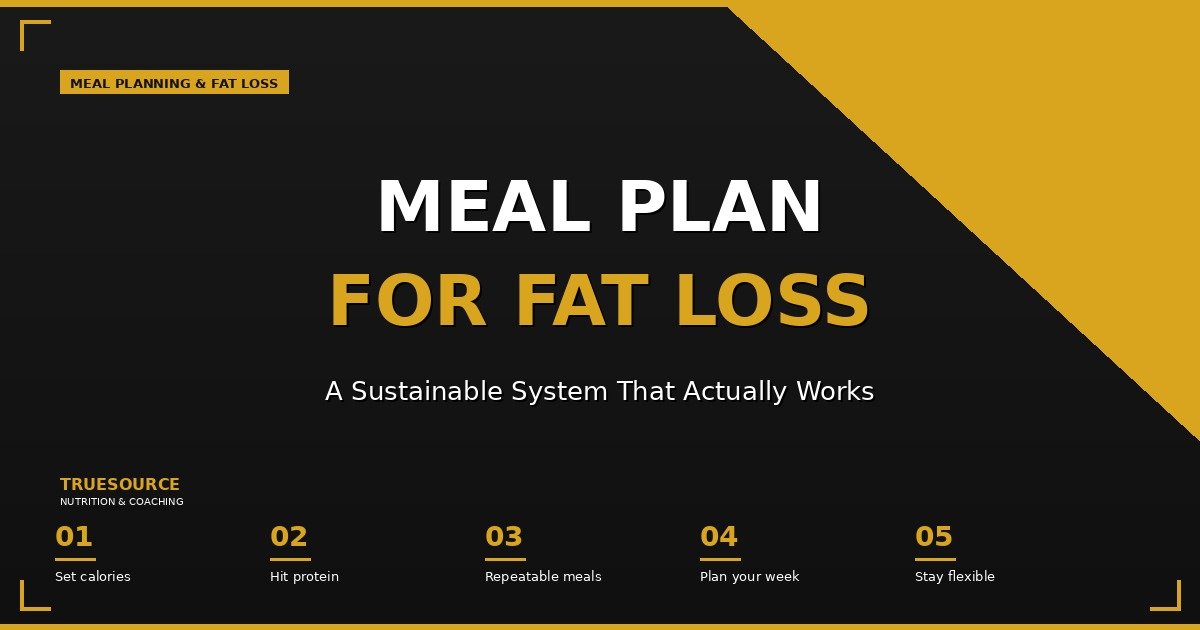
Most people don’t fail fat loss because they lack motivation.
They fail because they lack structure.
A proper fat loss meal plan isn’t restrictive.
It’s repeatable.
If you can build something you can follow for 12 weeks, you win.
Why Most Meal Plans Fail
Most meal plans are:
- Too complicated
- Too restrictive
- Too different from your normal eating habits
- Built around “perfect” eating
That’s not sustainable.
Fat loss works when the system is simple enough to repeat weekly.
Step 1: Set Your Calorie Target
Before building meals, you need structure.
Your calorie target should be based on:
- Bodyweight
- Activity level
- Training frequency
If you haven’t calculated your numbers yet, start here.
Without calorie structure, a meal plan is just guesswork.
Step 2: Build Protein Into Every Meal
Protein is the anchor of any effective fat loss meal plan.
Aim for:
1.0–2.0g per kg of bodyweight daily.
Instead of thinking about “what should I eat?”, think:
“How do I hit my protein target first?”
Example day:
Breakfast – Greek yoghurt + berries + whey
Lunch – Chicken wrap + salad
Dinner – Lean beef + rice + vegetables
Snack – Protein smoothie
Protein consistency reduces hunger and preserves muscle.
Step 3: Create 2–3 Repeatable Breakfasts
Decision fatigue kills consistency.
Pick:
- 2 breakfasts
- 2 lunches
- 2 dinners
Rotate them weekly.
Repetition improves adherence.
You don’t need 30 different meals.
You need 6–8 reliable ones.
Step 4: Plan Your Week Before It Starts
Sunday planning prevents mid-week panic.
Write down:
- Breakfast
- Lunch
- Dinner
- Snacks
Then build your shopping list around it.
When food is already in the fridge, adherence skyrockets.
Step 5: Leave Room for Flexibility
A sustainable fat loss meal plan allows:
- Social meals
- Eating out
- Occasional treats
Build a small calorie buffer into your week.
For example:
Slightly lower calories Monday–Friday
More flexibility Saturday
That keeps progress moving without feeling restricted.
The Difference Between a Diet and a System
A diet tells you what not to eat.
A system tells you how to structure what you do eat.
The goal isn’t perfection.
It’s consistency over months.
Common Fat Loss Meal Planning Mistakes
- Cutting calories too aggressively
- Ignoring protein
- Overcomplicating recipes
- Not planning snacks
- Failing to grocery shop in advance
The simpler the plan, the more likely it works.
Bringing It Together
A sustainable fat loss meal plan should:
- Hit calorie targets
- Prioritise protein
- Be repeatable
- Allow flexibility
- Fit your lifestyle
When structure meets flexibility, progress becomes predictable.
Want Structured Meal Plans Done For You?
Inside our membership you’ll find:
- Structured recipe libraries
- Built-in macro breakdowns
- Weekly planning tools
- A personal nutrition tracker
Explore membership options here → Become a member
Don’t forget to read our other blogs


2 Comments