High protein meals under 500 calories are one of the most effective tools for fat loss, because they keep you full while holding you in a calorie deficit. The simple rule: build every meal around at least 30–40g of protein from a lean source – chicken, white fish, lean mince, eggs, Greek yoghurt or tofu – then fill the plate with vegetables and add a measured portion of carbs or fat to land under 500 calories. Below are 12 UK-friendly meals that do exactly that, plus a formula so you can build your own without a recipe.
Why High Protein, Low-Calorie Meals Work for Fat Loss
Fat loss comes down to one thing: a sustained calorie deficit. The difficulty is never knowing that – it’s staying in the deficit without being hungry, irritable, and ready to quit by day four. This is where protein does the heavy lifting.
Protein is the most satiating macronutrient gram for gram. It blunts hunger hormones and increases fullness signals, which makes eating less feel less like a battle of willpower. It also carries the highest thermic effect of any macronutrient – your body uses roughly 20–30% of protein’s calories simply to digest it, compared with 5–10% for carbohydrates and 0–3% for fat. And crucially, a high protein intake during a deficit preserves muscle, so more of the weight you lose is fat rather than lean tissue.
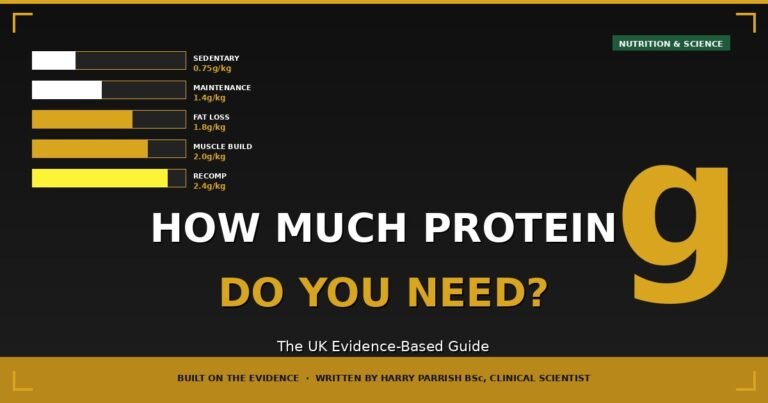
In short: protein keeps you full, costs you calories to process, and protects your muscle. A meal that is high in protein and under 500 calories gives you all three. For the full breakdown of how much you need, see our guide to daily protein intake for UK adults.
The Simple Formula for a High-Protein Meal Under 500 Calories
You don’t need to memorise recipes. Every meal below follows the same three-part template:
- A lean protein source (30–40g protein). Chicken breast, turkey mince, white fish, lean (5%) beef mince, eggs, Greek yoghurt, cottage cheese, tofu or tempeh.
- A high-volume vegetable base. Salad, roasted veg, stir-fried greens, or a large portion of something low in calories that fills the plate.
- A measured portion of carbs or fat. A fist of rice, potatoes or pasta, or a tablespoon of oil, nuts or avocado – measured, not guessed, because this is where most “healthy” meals quietly tip over 500 calories.
Get the protein right, let the vegetables provide volume, and control the carb-and-fat portion. That’s the whole game.
High-Protein Breakfasts Under 500 Calories
| Meal | Approx. calories | Approx. protein |
|---|---|---|
| 200g 0% Greek yoghurt + 30g berries + 20g granola + scoop of whey | ~350 kcal | ~45g |
| 3-egg veggie scramble + 1 slice wholemeal toast + 100g spinach | ~340 kcal | ~26g |
| Smoked salmon (75g) + 2 poached eggs + grilled tomatoes | ~330 kcal | ~32g |
Breakfast is where most people lose the protein battle – toast, cereal or fruit alone leaves you chasing the target all day. Starting the morning at 25–45g of protein makes the rest of the day far easier.
High-Protein Lunches Under 500 Calories
| Meal | Approx. calories | Approx. protein |
|---|---|---|
| Chicken breast (150g) + couscous (50g dry) + salad + light dressing | ~450 kcal | ~42g |
| Tuna (1 tin) + mixed bean salad + cherry tomatoes + balsamic | ~400 kcal | ~38g |
| Turkey & salad wholemeal wrap + side of carrot sticks | ~440 kcal | ~36g |
The trap at lunch is the “meal deal” a sandwich, crisps and a drink can hit 700+ calories with barely 20g of protein. Building lunch around a lean protein and a salad base flips that ratio.
High-Protein Dinners Under 500 Calories
| Meal | Approx. calories | Approx. protein |
|---|---|---|
| Chilli con carne (5% beef mince) + 50g (dry) rice | ~480 kcal | ~40g |
| Baked cod + new potatoes (180g) + roasted vegetables | ~420 kcal | ~38g |
| Chicken or tofu stir-fry + 1 nest of noodles + soy & ginger | ~480 kcal | ~37g |
Dinner is the easiest meal to bring under 500 calories because vegetables can do so much of the filling. Bulk out a curry, chilli or stir-fry with extra veg and you get a large, satisfying plate for the calories.
(All figures are approximate and depend on exact brands and portions – track for a few weeks to learn your own numbers.)
A Note on Portion Sizes and Tracking
The single biggest reason a “healthy” meal sails past 500 calories is the carb-and-fat portion: a generous glug of oil, a heaped serving of rice, a casual handful of nuts. Oil alone is roughly 120 calories per tablespoon. You don’t need to weigh food forever, but weighing your carbs and fats for two to four weeks builds an accurate mental model that lets you eyeball portions for life.
If you haven’t set your daily targets yet, our free calorie calculator uses the Mifflin-St Jeor equation to give you a personalised calorie and protein number in under a minute. From there, you know how many of these meals fit your day.
Common Mistakes With High-Protein, Low-Calorie Meals
- Under-dosing the protein. A meal isn’t high-protein because it “has some chicken in it.” Aim for a genuine 30–40g per meal.
- Forgetting liquid calories. A latte, juice or smoothie can quietly add 200–300 calories that don’t fill you up. Count them.
- Drowning a good meal in sauce or oil. The protein and veg are rarely the problem — the dressing usually is.
- Going too low. Sub-300-calorie meals across the day leave you ravenous by evening. Spread your calories across meals you’ll actually stick to.
Frequently Asked Questions
How much protein should a meal under 500 calories contain? Aim for 30–40g of protein per meal. Research suggests around 0.4g of protein per kilogram of body weight per meal maximally stimulates muscle protein synthesis – roughly 25–40g for most people – so this range supports both fullness and muscle retention.
Can I lose weight eating meals under 500 calories? Yes, provided your total daily calories sit below your maintenance level. Meal calories matter only in the context of your daily total – three 450-calorie meals plus a snack is a sensible fat-loss day for many people.
Are high-protein meals expensive in the UK? Not necessarily. Eggs, tinned tuna, frozen white fish, lean mince, tofu, Greek yoghurt and tinned beans are all affordable, high-protein staples available in every UK supermarket.
Do I need protein powder? No. Whole foods are more satiating and nutritionally complete. Protein powder is a convenient way to top up your target – useful in a yoghurt bowl or smoothie – but it’s optional. Food first.
Make It Automatic
Knowing the formula is easy. Hitting it every day, meal after meal, is where most people fall down. The Truesource membership gives you 500+ macro-tracked recipes – every one showing full calories and protein – plus a meal planner that builds your week around your calorie and protein targets automatically. No guessing, no maths at 9pm.
Explore the Truesource membership from £14.99/month →
Further reading: How Much Protein Do I Need Per Day? | Macro Tracking for Fat Loss | How to Build a Fat Loss Meal Plan