It’s 11pm a Tuesday night. Everyone else in the house has gone to bed. You’re sat at the kitchen table with a laptop open, a lukewarm brew going cold next to it, planning the next session for your grassroots sports club.
Nobody sees this bit.
They see you on the touchline on a Saturday. They see the ninety minutes. What they don’t see is the second job you’ve been quietly doing all week — the one you don’t get paid for, don’t get thanked for, and never actually applied for.
Let’s actually name it, because most coaches have never added it up.
The planning. Every session you run has to be designed before you run it. What’s the focus, what drills, what does it look like if only nine turn up, how does it fit what you did last week and what you need in three weeks’ time. That’s not ten minutes. Do it properly and it’s an hour of real thinking, every single week.
The performance planning. On top of the sessions there’s the bigger picture — where the squad needs to be by the back end of the preaseason, who needs developing in which area, how you build fitness through a block without breaking anyone. Professional clubs have someone whose entire job this is. At your club, it’s you, at the kitchen table, at night.
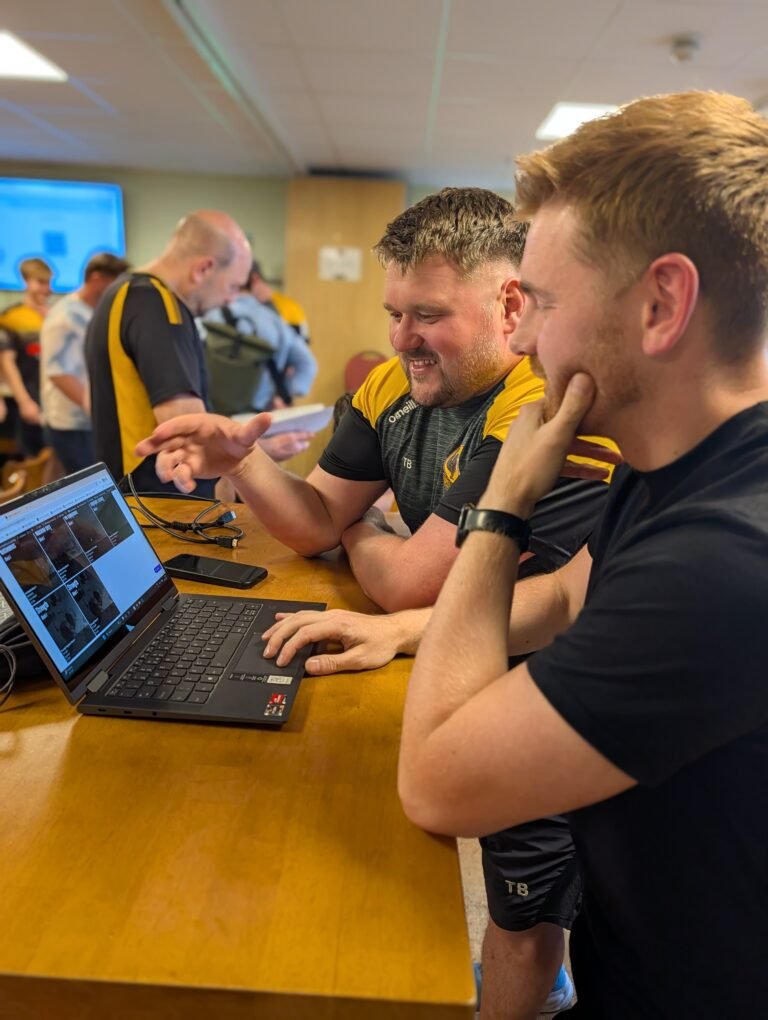
The video analysis. If you’re doing it, you’re doing it late or taking up your Sunday. Scrubbing back through phone footage of Saturday’s game, clipping the bits worth showing, working out what to say about them without deflating anyone. Hours of it, for maybe five minutes of feedback that lands.
Team selection. The one that costs you sleep. It’s never just picking the best fifteen — it’s the lad who’s trained every week and isn’t quite good enough, the one who’s better but hasn’t turned up since March, the mate you’ve known twenty years who’s slowing down and doesn’t know it yet. You’ll draft it, maybe change it, and whatever you pick, someone’s pulling out the night before.
Player management. The messages. Always the messages. Availability, injuries, lifts, someone’s had a falling-out with someone else, someone’s confidence is shot, someone’s going through it at home and this club is the only stable thing they’ve got. You’re a manager, a counsellor and a diplomat, mostly by text, mostly after 9pm.
Staff management. Because you’re not just managing players. You’re managing the other voluneers and coaches, the assistant who can’t make Thursdays anymore, the physio who’s brilliant but unreliable, the committee member with strong opinions and no availability. Everyone’s a volunteer, which means nobody can be told, only asked. Carefully.
And then, after all of that – only fourteen blokes turn up to training.
That’s the bit that breaks people. You’ve done the analysis. You’ve built the block. You’ve planned a session that would genuinely make them better. And you’re sat there on Thursday at half six, watching the group chat, counting heads, doing the maths on whether you can even run what you planned — because four are working late, two are “feeling it,” and one’s just left you on read.
All that work. To beg people to show up.
The cost of running that grassroots sports club
Add it up honestly. Session planning, performance planning, analysis, selection, the messages, the admin, the chasing. For most grassroots coaches it’s somewhere around fifteen hours a week — every week, for months on end.
That’s a part-time job. Unpaid.
And the cost isn’t only hours. It’s the evenings you’re physically at home but mentally on a team sheet. It’s your partner asking if you’re actually listening. It’s the low-level hum of things undone. It’s the fact that a game you used to love turning up to now arrives with a to-do list attached.
That’s the real price. Not the petrol money or the subs you quietly cover — the headspace.
The bit worth being honest about
The easy response to a list like that is “delegate some of it.”
But you can’t, and anyone who’s actually done this job knows why. Selection needs your judgement — nobody else knows that squad like you do. Man-management needs your relationships, built over years. Leading the session needs you in the room. Reading whether a player needs an arm round the shoulder or a rollicking isn’t something you can hand to a volunteer. The admin lands on you because there’s genuinely nobody else to give it to.
So no, you can’t offload it. That’s not the problem.
By the time you’ve planned the session, picked the side, answered the messages, sorted the staff and completed game day. There’s no hours, no headspace, no budget. And so the work that would genuinely make those players better never gets started.
What if players had access to…
Structured gym programmes so they’re getting stronger through the season instead of just turning up. Nutrition, so they’re fuelled to last eighty minutes and actually recover between games. Educating them on why any of it matters, so they do it without being chased. That’s the stuff that turns a decent amateur side into a genuinely well-prepared one — and at most grassroots clubs it isn’t on the to-do list at all. It’s not being ignored. There was simply never a version of the week where it could exist.
I know this one first-hand, and it’s the reason Truesource exists.
I’ve got a degree in sport and exercise science and a career in clinical science behind me. I know what a properly periodised strength block looks like. I know what these players should be eating and why. It’s the thing I’m actually qualified to give a squad — and for years I couldn’t, because by the time I’d got through everything else the week demanded, there was no time left to build it. The knowledge was sat there, useless, while the players got none of it.
That’s a particular kind of frustration: not lacking the expertise, but lacking the hours to hand it over.
And if that’s true for someone with the qualifications, it’s true for every coach without them. Not because anyone’s cut corners — because one person cannot run a club and build a performance department in the same week.
Closing the loop
We started this series by saying the pressure you feel isn’t a personal failing — it’s structural. This is what we meant. You were handed a job built for a department, and asked to do it alone, after work, for free. And the casualty is always the same: the performance work that would take your players furthest is the thing that never makes it onto the list.
That’s exactly why we built Truesource Teams. Not to take the coaching off you — that was never the problem. To finally deliver the part you’ve never had the hours to build. Structured 12-week strength and conditioning programmes going straight to every player, a full nutrition hub and meal planner, and a coach dashboard so you can see who’s actually doing the work without chasing a single one of them. From £6 per player per month.
Built by coaches, for coaches — because we’ve had that laptop open at midnight too, knowing exactly what the squad needed and having no hours left to give it to them.
You’ll still have the late nights that matter. The selection headaches. The group chat. That’s the job you signed up for.
But your players shouldn’t miss out on the performance side just because there’s only one of you.